A waste bill is mostly a disposal bill, and disposal is priced by what is in the load. Separate the material and the same volume of waste costs less to get rid of, sometimes considerably. Here is where the money actually goes, and what the Western Cape rules coming in 2027 will do to it.
Where the money in a waste bill actually goes
Collection is the visible part of the cost. Disposal is usually the bigger part, and it is charged by weight and by class of waste. That is why two businesses producing the same volume can pay very different amounts.
A clean load of one material goes to the cheapest route available. Cardboard and plastic film that has been kept dry and separate has resale value, so it offsets part of the collection cost instead of adding to it. The same cardboard soaked in food waste is general waste, and general waste goes to landfill at a landfill tariff.
What separating at source is actually worth
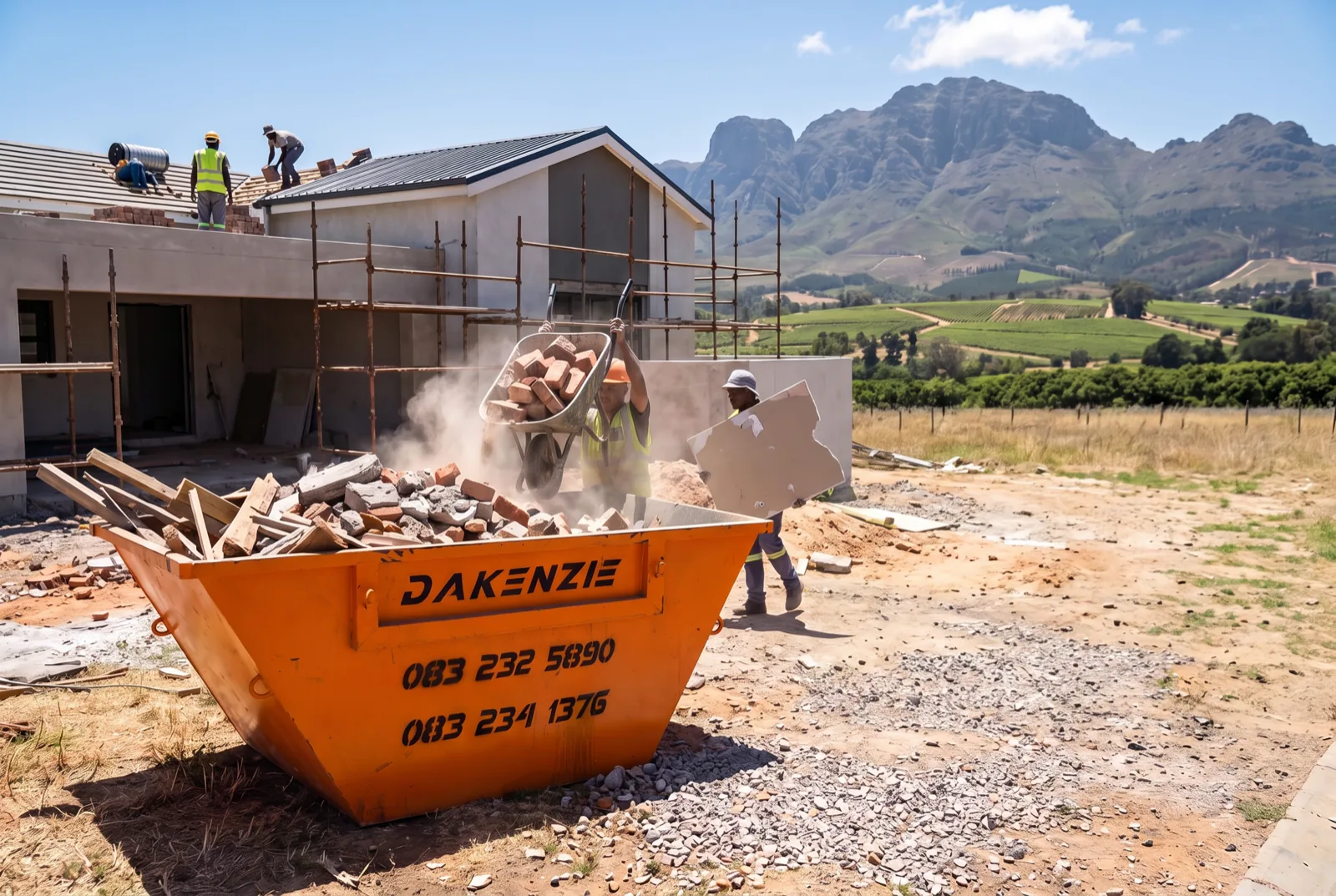
Locally the numbers are specific. Drakenstein accepts clean builders rubble at the Wellington landfill, and clean means sand, stone, soil and pieces of concrete or brick under 100mm with no iron, plastic or wood in it. A load that fails that test is charged by weight, around R262.50 a ton at the time of writing.
One contaminated skip on a demolition job can therefore cost more than the hire itself. The fix is not complicated: put the timber and packaging somewhere else before it lands in the rubble bin.
The materials that pay for themselves
- Cardboard, kept dry and flattened
- Plastic film, baled rather than bagged
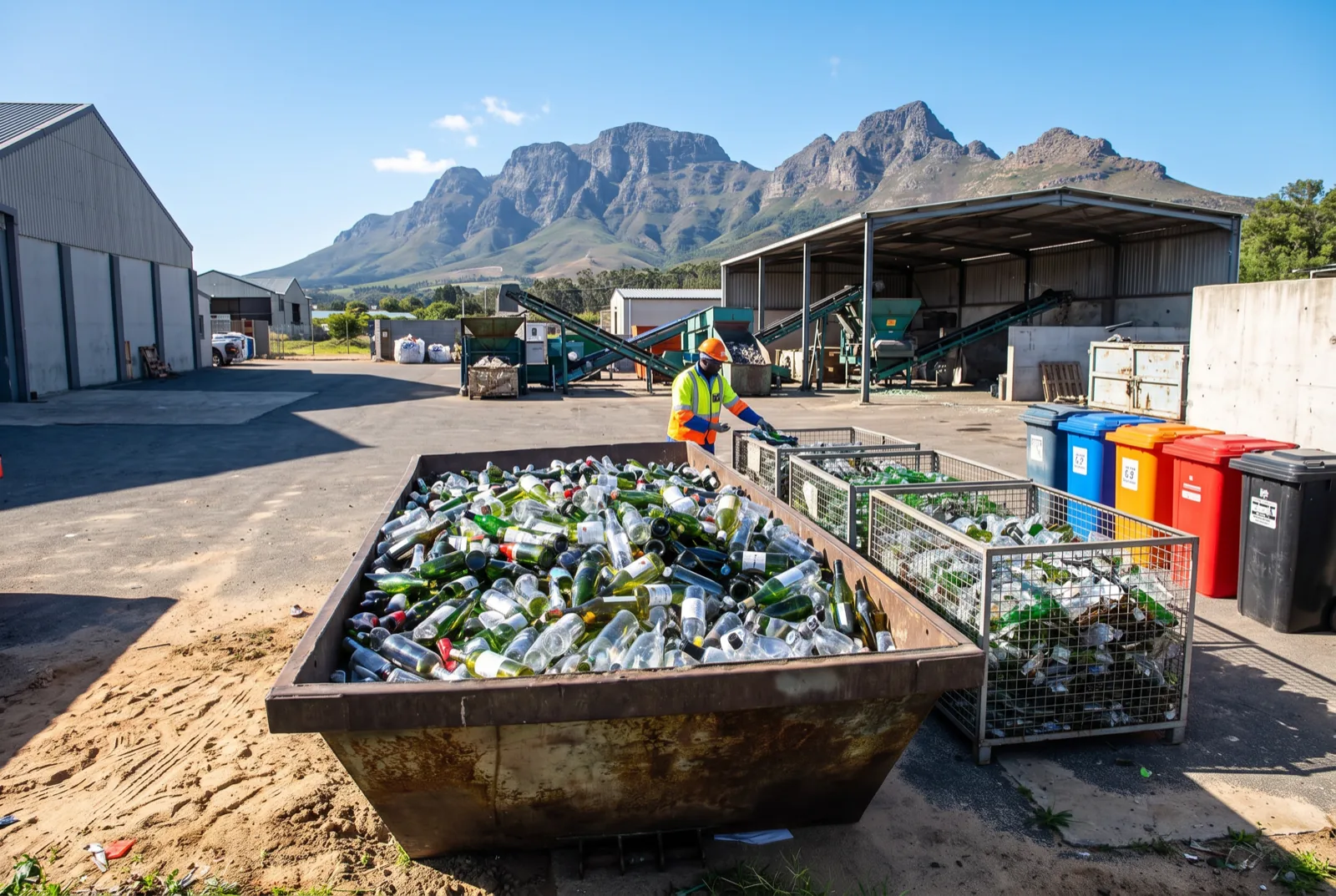
- Glass, which is heavy and cheap to landfill but has a real recycling route
- Clean rubble, which stays in the lowest disposal class
We bale on site with X25 and H20 balers, which matters more than it sounds. Loose cardboard is mostly air, so you pay to transport air. Baled, the same material moves in a fraction of the trips.
Which container suits which material
Matching the container to the stream does most of the work. The wrong container turns a material with value into general waste, and general waste is the most expensive line on the bill.
| Material | Container | Where it goes | Effect on cost |
|---|---|---|---|
| Cardboard | Cage, baled on site | Recycler | Offsets collection |
| Plastic film | Cage, baled | Recycler | Offsets collection |
| Glass | Cage or rocker bin | Recycler | Heavy, so avoiding the landfill tariff matters |
| Food waste | Rocker bin, scheduled | Diversion, not landfill | Avoids a tariff that is about to rise |
| Garden and green | Skip or cage | Chipping and composting | Cheap now, restricted from 2027 |
| Clean rubble | Skip | Wellington landfill | Lowest disposal class |
| Mixed general | Skip | Landfill | Highest, and rising |
The row that surprises people is glass. It has a real recycling route and it is heavy, so a tasting room putting empties into general waste is paying a landfill tariff by the ton on something a recycler would take.
The 2027 organic waste ban, and why it starts mattering now
The Western Cape has taken a faster route than waiting for national law. Organic waste diversion targets are written directly into landfill operating licences, which means every landfill has to show a declining intake of organic material or risk its licence. The province is working towards a 100% organic waste landfill ban in 2027, following the 50% diversion target set in 2022.
For a restaurant, tasting room or pack house, the practical effect arrives before the deadline does. As landfills tighten what they will accept, mixed loads with food waste in them get more expensive and, eventually, refused. Businesses are also expected to be able to show evidence of source separation and Extended Producer Responsibility participation.
Setting up separate food waste collection now costs about the same as setting it up in 2027, with two differences: you have time to get the habit right, and you are not competing for capacity with everyone else who left it late.
How to read your current waste bill
Before changing anything, work out what you are actually being charged for. Most waste invoices are built from four separate things, and they respond to different fixes.
| Line on the invoice | What it is | What reduces it |
|---|---|---|
| Container rental | Paid per bin, full or empty | Fewer or smaller containers |
| Collection or lift | Per visit, regardless of weight | A schedule that matches how fast bins fill |
| Disposal | By weight and class of waste | Taking recyclables out of the general stream |
| Contamination | Charged when a load fails its class | Separation at the bin, not at the yard |
| Emergency collection | Out-of-schedule call-outs | Right-sizing the container so it stops overflowing |
Two numbers tell you most of what you need. Compare the number of lifts against how full the containers actually were, and compare your disposal tonnage against what you would expect if the recyclables had been taken out.
A site paying for weekly collections on a bin that is half full is buying lifts, not disposal. That is fixed by changing the schedule or the container size, and it needs no new equipment at all. A site with a high disposal figure and no recycling credit has the opposite problem, and that one is fixed at the bins.
How to set separation up so it actually happens
Most separation schemes fail for the same reason. The bins are in the wrong place, so using them properly takes more effort than not bothering.
- Walk the site and find where waste is actually generated: the back door of the kitchen, the end of the packing line, the receiving bay.
- Put a labelled container at each of those points, sized for how fast it fills rather than how much space is spare.
- Give the heavy, low-value material its own route. Glass and rubble should never share a bin with anything you want to sell.
- Set a collection rhythm that matches production, so nothing overflows and nobody starts using the wrong bin because the right one is full.
- Check the bins after two weeks. Whatever is in the wrong container tells you where a label or a bin position needs to move.
That last step is the one people skip, and it is the one that turns a well-meant system into a working one.
Garden and green waste, which the ban also catches
Green waste behaves differently from everything else on site. It weighs little once it is loose but takes up volume fast, so it is one of the few streams where a larger container collected once beats a small one collected often.
It is also organic, which means the 2027 diversion rules apply to it as much as they do to kitchen waste. Estates, landscapers and municipalities across the Winelands generate a lot of it, particularly after pruning, and the cheap route of putting it in a general skip is the route that closes first.
Kept separate it chips and composts. Mixed with builders rubble or general waste it does neither, and it drags the whole load into a more expensive class. On a site doing both landscaping and building work at once, the single most useful thing you can do is give the green waste its own skip.
Where separation schemes usually go wrong
The failures repeat, and they are all fixable.
The bin is in the wrong place
If the recycling bin is thirty metres further than the general one, the general one wins. Distance beats good intentions every time.
Nobody told the night shift
Separation gets explained once, to whoever was on duty. New staff and contractors inherit a system nobody has described to them.
The container is the wrong size
A bin that overflows before collection stops being a recycling bin the moment someone puts a bag next to it. Size for the fill rate, not the space.
Wet and dry are sharing
Cardboard that has been rained on or soaked by food waste loses its value. Covering the cardboard cage is usually the cheapest improvement available.
It is never checked
Two weeks in, look inside the bins. What is in the wrong one tells you exactly which label or position needs to change.
What changes on the invoice
Separation moves cost in four directions at once, and only one of them is up.
Less material goes to landfill, so the disposal charge falls. Clean recyclables carry resale value, so part of the stream becomes a credit. Fewer overflowing bins means fewer emergency collections, which are the most expensive kind. Against that, you carry the cost of more containers and a little more handling on site.
On the sites we run in Paarl and Wellington, the first three comfortably outweigh the fourth once the habit is established. The businesses where it does not work are the ones that put the bins in and never checked them again.
There is a compliance dividend too. A separated stream with collection records behind it is the evidence an auditor or a client asks for, and it is much easier to produce as a by-product of how you already work than to assemble afterwards.
Questions we get asked
Why is my waste bill so high?
Usually one of two reasons. Either you are paying for collections rather than disposal, with bins going out half full on a fixed schedule, or your general waste tonnage is high because recyclables are still in it. Compare the number of lifts against how full the containers actually were; that one check tells you which problem you have.
What should a waste invoice show?
Container rental, collections, disposal by weight, and any penalties separately. If lifts and disposal are combined into one figure you cannot tell which one to fix, and it is reasonable to ask for an invoice that splits them.
Where does garden waste go?
Kept separate it is chipped and composted. Mixed into a general or rubble skip it is neither, and it moves the whole load into a more expensive class. Green waste is also organic, so the 2027 diversion rules apply to it.
How much can separating waste actually save?
It depends on what you produce, but the two levers are large: material diverted from landfill stops attracting a disposal charge, and clean recyclables carry resale value. On a site producing a lot of cardboard or glass, the recyclable stream can offset a meaningful share of the collection cost.
Does mixed waste really cost more to dispose of?
Yes, and locally it is explicit. Drakenstein charges contaminated builders rubble by weight, around R262.50 a ton, where a clean load goes to the cheapest route. Adding timber or plastic to a rubble skip changes the class of the whole load, not just the part that was contaminated.
What is the Western Cape organic waste ban?
The province has written organic waste diversion into landfill operating licences, working towards a 100% ban on organic waste going to landfill in 2027. Landfills must show a declining intake of organic material, so the practical effect reaches businesses before the deadline.
Do I need to separate food waste at my restaurant?
You will. Food waste is the stream the organic ban targets, and businesses are already expected to show evidence of source separation. Rocker bins on a fixed collection schedule handle it without taking up the space a skip would.
Is baling worth it for a small business?
Baling pays off where you generate volume in one material, usually cardboard or plastic film. Loose cardboard is mostly air, so you pay to move air. If you fill a cage a week, it is worth the conversation.
What is EPR and does it apply to me?
Extended Producer Responsibility makes producers and importers responsible for the packaging their products leave behind. If you place packaged goods on the market you are likely in scope, and being able to show where your packaging waste goes is part of it.
Can you take waste away and give me records for an audit?
Yes. Scheduled collections produce a paper trail as a matter of course, which is what makes it usable when a client or an auditor asks where your waste went.
If you would rather just describe the job, get in touch and we will tell you what we would send. See skip and cage hire, waste and recycling, transport and haulage or pressure washing for what each division covers.