Grime builds slowly enough that you stop seeing it. An inspector has no such blind spot, and on a food or wine premises the yard is part of what gets assessed. Here is what the regulations actually require, which surfaces take high pressure and which are damaged by it, and how often the job needs doing.
What the regulations actually require
Food premises in South Africa fall under Regulation R638 of 2018, the regulations governing general hygiene requirements for food premises and the transport of food, made under the Foodstuffs, Cosmetics and Disinfectants Act 54 of 1972. It applies to any premises handling food, which covers restaurants, tasting rooms, pack houses and cellars alike.
The requirement is that premises are kept clean and constructed so they can be kept clean, with surfaces that are cleanable and conditions that prevent contamination. That wording matters, because it puts the standard on the state of the place rather than on how recently someone cleaned it. A yard that cannot be cleaned properly is a problem even if it was swept this morning.
The areas that get looked at first
On the premises we clean around Paarl, Wellington and Franschhoek, the same handful of places come up every time.
Bin stores and waste areas
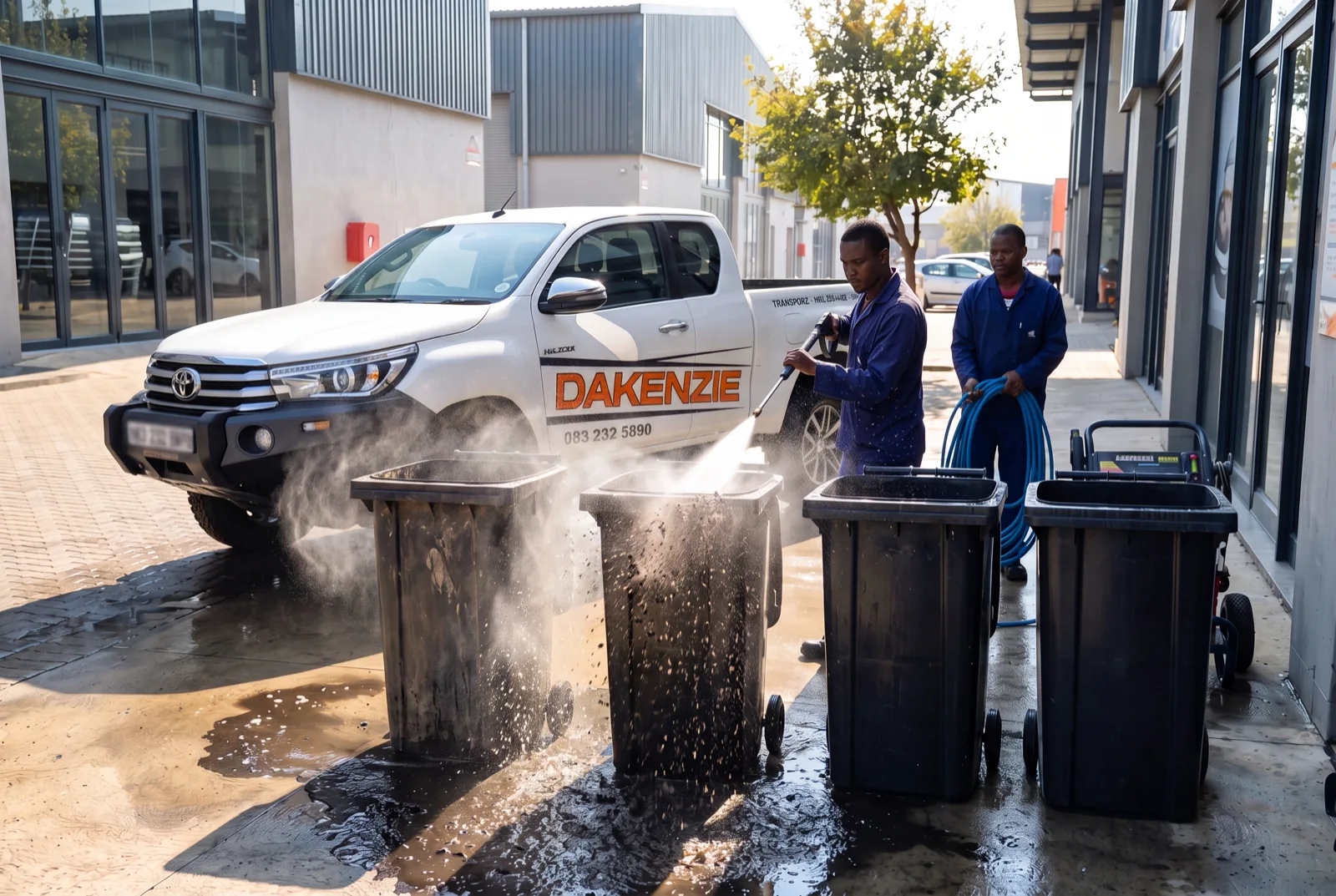
The highest-risk area on most sites and the one most often neglected. Residue on the floor and on the bins themselves attracts pests, which is a finding in its own right.
Loading and receiving bays
Where outside meets inside. Spillage here tracks into the building on wheels and boots.
Drain surrounds and channels
Standing residue around a drain is both a hygiene finding and a slip hazard. Pressure cleaning shifts what a mop moves around.
Yard paving and walkways
Algae on shaded paving is slippery long before it looks dangerous. In the Winelands it grows back fastest on the south side of buildings through winter.
Forecourts and parking
Oil staining reads as neglect to a visitor before an inspector ever sees it.
Which surfaces take pressure, and which do not
High pressure is a tool, not a setting. Used at the wrong pressure or the wrong distance it strips more than dirt, and the damage is usually permanent.
| Surface | Pressure | What to watch |
|---|---|---|
| Concrete | Full | Nothing, beyond keeping the lance moving |
| Brick paving | Full | Jointing sand washes out and needs topping up |
| Face brick | Full to medium | Older mortar joints can be soft |
| Industrial floor coating | Full | Check the coating is sound first |
| Painted surfaces | Low, wide fan | Sound paint survives; failing paint will not |
| Soft sandstone | Low | Erodes permanently if worked too close |
| Lime mortar | Low | Washes out of the joint and has to be repointed |
| Timber decking | Low, wide fan | Raises the grain if pressure is too high |
| Asbestos cement | Never | Releases fibres; needs a specialist, not a washer |
The other consideration is where the water goes. Washing contaminated residue into a stormwater drain moves a problem rather than solving it, so on food premises the run-off route needs thinking about before the machine starts.
How often does a yard need doing?
Frequency depends on what the surface takes, not on the calendar. As a starting point for a Winelands site:
- Bin areas and waste stores: monthly, and weekly through harvest or a busy summer service
- Loading bays and receiving areas: quarterly, more if you handle wet product
- Yard paving and walkways: twice a year, with the second pass timed for the end of winter when algae is at its worst
- Forecourts and parking: annually, or before an audit or an open day
A site on a schedule needs less work each visit than one cleaned once a year, and costs less over the year for the same reason. Grime that has been left to bond into a surface takes longer to lift and sometimes never fully does.
What moves the price
Pressure cleaning is quoted on area, surface and condition, in that order. A thousand square metres of sound concrete is a straightforward job. Half that in a bin store that has not been touched in two years is not.
- Area, measured rather than estimated, because a yard always looks smaller than it measures
- How long the grime has been there, since bonded residue needs more passes
- Whether the surface needs a degreaser or a treatment before the wash
- Access and hours, because a job done between shifts takes longer than the same job done on an empty site
- Whether run-off has to be contained rather than allowed to drain
The largest single saving available is frequency. A site on a schedule needs fewer passes each visit, so the per-visit cost falls and the yearly total falls with it. Sites that call once a year pay the most per square metre every time.
We quote after seeing the surfaces, either in person or from photographs. Anyone quoting a food premises sight unseen is guessing at the two things that matter most.
Working around a live site
Nobody can close a cellar during harvest or a restaurant on a Friday. Our teams arrive with their own machines and water, so there is nothing to supply from your side, and we work early mornings, weekends and between shifts.
Two things make a visit go faster. Clear the area of anything that should not get wet, and tell us in advance about surfaces you are worried about, particularly older paving, painted floors and anything that has been repaired recently. We assess before starting and will flag what we think will not take pressure, but you know the building's history better than we do.
Where a site produces the mess as fast as we clean it, the answer is usually a shorter cycle rather than a harder clean. That is worth saying plainly: if the bin area is filthy again in a fortnight, the collection schedule is the problem, not the cleaning.
Questions we get asked
Does pressure washing count towards food safety compliance?
It is one of the ways you meet the requirement. R638 requires food premises to be clean and to be constructed so they can be kept clean. High pressure cleaning is how most outdoor and hard-surface areas get to that standard, but it does not replace daily cleaning routines inside.
How often should a bin area be pressure cleaned?
Monthly for most food premises, and weekly through harvest or a busy summer season. Bin areas are the highest-risk part of a site and the first place residue and pests show up.
Can pressure washing damage paving or paint?
It can. Soft sandstone, lime mortar, painted surfaces, timber and failing pointing all need lower pressure and a wider fan. Asbestos cement sheeting must never be pressure washed, since it releases fibres.
Do I need to supply water or power?
No. Our teams bring their own machines and water, so there is nothing to arrange on your side beyond access.
Can you work outside business hours?
Yes, and on live sites that is usually the point. Early mornings, weekends and between shifts are normal for us.
What is the difference between pressure washing and high pressure cleaning?
Nothing, in practice: the terms are used interchangeably. What matters is the pressure and nozzle chosen for the surface, which is what separates a clean from a repair bill.
Will it fix oil stains on a forecourt?
It lifts most of it, though old oil that has soaked into porous concrete may leave a shadow. A degreaser applied before the wash makes a large difference on a forecourt that has never been done.
If you would rather just describe the job, get in touch and we will tell you what we would send. See skip and cage hire, waste and recycling, transport and haulage or pressure washing for what each division covers.